Non-Surgical Knee Pain Relief for Athletes, Active Adults & Patients with Chronic Knee Pain
Find Relief from Knee Pain with Non-Surgical Knee Decompression
Knee pain can make everyday activities such as walking, climbing stairs, exercising, or simply getting out of a chair uncomfortable. For athletes and weekend warriors, knee problems can also interfere with training, performance, and participation in their favorite sports.
At Kaseman Family Chiropractic in Throgs Neck, Bronx, NY, Dr. David Kaseman offers knee decompression therapy, a non-invasive treatment designed to gently stretch the knee joint and help relieve discomfort.
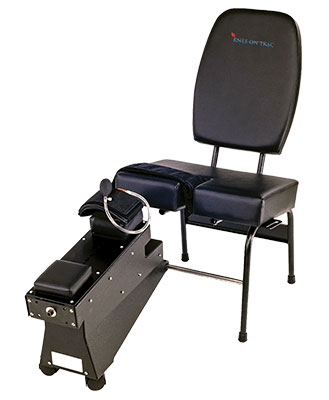
Using a specialized knee decompression chair, this therapy applies controlled traction to the knee with the goal of reducing joint compression, improving comfort, and supporting mobility.
Whether you’re experiencing chronic knee pain, arthritis-related stiffness, or lingering discomfort following a sports injury, knee decompression may be a valuable addition to your treatment plan.
Our goal is to help you move more comfortably, stay active, and get back to doing what you love.
What Is Knee Decompression Therapy?
 Knee decompression is a non-surgical treatment that uses gentle, controlled traction to temporarily separate the surfaces of the knee joint.
The knee is a weight-bearing joint that absorbs considerable stress during walking, running, jumping, and other activities.
Over time, repetitive movement, previous injuries, and age-related changes can contribute to joint discomfort, stiffness, and reduced mobility.
Knee decompression therapy is designed to temporarily reduce compressive forces within the joint.
Unlike surgical procedures, knee decompression does not involve incisions, injections, or anesthesia.
The treatment is performed while you are seated comfortably in a specialized therapeutic chair.
For patients seeking conservative knee pain treatment in the Bronx, knee decompression offers another option to discuss with Dr. Kaseman.
How Does the Knee Decompression Chair Work?
Gentle, Controlled Traction for the Knee Joint
The knee decompression chair is a specialized therapeutic device designed to apply controlled traction directly to the knee.
During treatment, you sit in a supportive chair while your leg is positioned and secured using adjustable supports.
The device then applies a gentle pulling force to the lower leg, creating temporary distraction within the knee joint.
The traction force can be adjusted according to your condition, comfort level, and treatment goals.
This controlled stretching is intended to temporarily reduce joint compression and may help relieve stiffness or discomfort.
Unlike traditional stretching exercises, the decompression chair allows traction to be applied in a controlled and consistent manner.
Knee decompression does not permanently enlarge joint spaces, regenerate cartilage, or reverse arthritis. Its potential benefits relate primarily to symptom management and improved comfort.
Clinical evidence for specialized knee decompression chairs remains limited, so results vary among patients.
What Conditions May Benefit from Knee Decompression?
Knee decompression may be considered for selected patients experiencing knee pain, stiffness, or restricted movement.
Conditions and symptoms that may warrant an evaluation include:
- Knee Osteoarthritis: Pain and stiffness associated with age-related joint changes.
- Chronic Knee Pain: Persistent discomfort that interferes with daily activities.
- Knee Joint Stiffness: Difficulty bending or straightening the knee comfortably.
- Sports-Related Knee Pain: Discomfort associated with repetitive athletic activity.
- Overuse Injuries: Knee irritation caused by repeated running, jumping, or training.
- Patellofemoral Pain: Discomfort around or behind the kneecap.
- Meniscus-Related Pain: Certain persistent symptoms following a previously evaluated meniscus injury.
- Reduced Knee Mobility: Limited movement associated with joint discomfort or stiffness.
Not every knee condition is appropriate for traction-based treatment.
Acute ligament injuries, unstable joints, fractures, and certain other conditions may require different treatment approaches.
Dr. Kaseman will evaluate your symptoms and medical history to determine whether knee decompression is appropriate.
Knee Decompression for Knee Arthritis
A Conservative Approach to Arthritis-Related Knee Pain
Knee osteoarthritis is a common cause of persistent knee pain, particularly among middle-aged and older adults.
As the protective cartilage within the knee changes over time, patients may experience stiffness, swelling, discomfort, and difficulty with everyday movement.
Symptoms can become especially noticeable when climbing stairs, walking long distances, or standing after sitting.
Knee decompression therapy uses controlled traction to temporarily reduce compressive forces across the joint.
Some patients may experience improved comfort or reduced stiffness following treatment.
However, knee decompression does not rebuild damaged cartilage or cure osteoarthritis.
At Kaseman Family Chiropractic, Dr. Kaseman may incorporate knee decompression into a broader conservative treatment plan that includes therapeutic exercises, mobility work, and other appropriate therapies.
The goal is to help patients manage discomfort and maintain their ability to perform everyday activities.
Knee Decompression for Athletes and Weekend Warriors
Don’t Let Knee Pain Keep You on the Sidelines
Knee pain is common among athletes who participate in activities involving running, jumping, squatting, pivoting, or repetitive impact.
Basketball players, runners, cyclists, weightlifters, golfers, and recreational athletes all place different demands on their knees.
Overtraining, inadequate recovery, previous injuries, and muscle imbalances may contribute to recurring discomfort.
For certain athletes experiencing persistent knee stiffness or discomfort, knee decompression may be considered as a supportive treatment.
The gentle traction may provide temporary symptom relief, making it easier to participate in appropriate rehabilitation exercises.
However, decompression does not replace the strengthening, stability training, and progressive loading needed for many sports injuries.
At Kaseman Family Chiropractic, we focus on helping athletes address the factors contributing to their symptoms rather than simply masking pain.
Our Sports Injury Rehabilitation services emphasize individualized treatment and functional recovery.
Knee Pain Commonly Experienced by Athletes
Athletes may experience knee discomfort associated with:
- Running and repetitive impact
- Basketball and jumping activities
- Weightlifting and squatting
- Cycling and repetitive knee movement
- Previous sports injuries
- Muscle weakness or imbalances
- Overtraining and inadequate recovery
- Limited flexibility or joint mobility
A proper evaluation helps determine whether knee decompression or another treatment is best suited to your condition.
Benefits of Knee Decompression Therapy
A Non-Invasive Option for Managing Knee Pain
Knee decompression offers several potential advantages for patients seeking conservative care.
Non-Surgical Treatment
Knee decompression does not require incisions, anesthesia, or surgery.
Drug-Free Pain Management
Treatment provides an option for managing certain knee symptoms without relying on pain medication during the procedure.
Gentle Joint Traction
Controlled traction temporarily reduces compressive forces within the knee joint.
May Help Reduce Stiffness
Some patients may experience temporary relief from joint stiffness and discomfort.
Supports Comfortable Movement
Symptom relief may make walking and certain daily activities more comfortable.
Adjustable Treatment
The traction force can be customized based on the patient’s condition and tolerance.
Complements Rehabilitation
Knee decompression may be combined with strengthening exercises, mobility training, and other conservative treatments.
No Surgical Recovery Period
Most patients can resume ordinary daily activities following treatment, subject to their underlying condition.
Because research on specialized knee decompression devices is limited, these potential benefits should not be interpreted as guaranteed results.
What to Expect During Your Knee Decompression Appointment
Step 1: Knee Pain Evaluation
Your appointment begins with a consultation and evaluation by Dr. David Kaseman.
He will review your symptoms, medical history, previous injuries, and current activity level.
Your evaluation may include an assessment of knee mobility, joint stability, strength, and movement patterns.
This helps determine whether knee decompression is an appropriate treatment option.
Step 2: Comfortable Positioning
During treatment, you will sit in the knee decompression chair.
Your leg will be positioned using adjustable supports designed to stabilize the limb while traction is applied.
Dr. Kaseman or a trained team member will explain the procedure and ensure you are positioned comfortably.
Step 3: Gentle Knee Traction
The device applies a controlled pulling force to the knee joint.
You may notice a gentle stretching or pulling sensation around the knee.
The amount of traction can be adjusted according to your comfort and treatment needs.
Treatment should not cause significant pain. Let your provider know immediately if you experience sharp discomfort or unusual symptoms.
Step 4: Post-Treatment Recommendations
Following treatment, Dr. Kaseman may recommend therapeutic exercises, stretching, activity modifications, or complementary treatments.
The number and frequency of sessions depend on your condition and response.
Some patients may notice temporary changes in comfort or mobility, while others may require a different approach to managing their symptoms.
Knee Decompression and Chiropractic Care
A Comprehensive Approach to Knee Pain Relief
Knee pain is not always caused by a problem within the knee alone.
The hips, ankles, feet, and surrounding muscles all influence how forces are distributed through the lower extremities.
Restricted joint movement, muscle weakness, and altered walking mechanics may contribute to ongoing knee discomfort.
At Kaseman Family Chiropractic, Dr. Kaseman takes a comprehensive approach to musculoskeletal care.
When appropriate, knee decompression may be combined with chiropractic care to address related joint restrictions and movement limitations.
Chiropractic treatment may focus on improving mobility in the lower back, pelvis, hips, or other areas that influence lower-extremity movement.
Knee decompression provides a separate treatment option focused on temporarily reducing compression within the knee joint.
Together with appropriate rehabilitation, these treatments may help patients work toward improved comfort and function.
Combining Knee Decompression with Other Treatments
Personalized Knee Pain Treatment at Kaseman Family Chiropractic
Successful knee rehabilitation often requires addressing several contributing factors.
For some patients, muscle weakness or poor movement mechanics may be more important than joint compression.
Others may benefit from treatment focused on soft tissue irritation, mobility restrictions, or chronic pain.
Depending on your condition, Dr. Kaseman may recommend combining knee decompression with other services available at the clinic.
Sports Injury Rehabilitation
Sports injury rehabilitation focuses on restoring strength, stability, flexibility, and functional movement.
Therapeutic exercises can help improve knee support and prepare athletes for a gradual return to activity.
Shockwave Therapy
Shockwave therapy uses targeted sound waves to address certain musculoskeletal pain conditions.
For selected patients with tendon-related knee pain, shockwave therapy may be considered as part of a comprehensive rehabilitation program.
Class IV Laser Therapy
Class IV laser therapy uses therapeutic light energy and may be incorporated into treatment plans for certain musculoskeletal conditions.
It may be considered as an adjunct to rehabilitation and other conservative treatments.
Chiropractic Adjustments
Chiropractic care may help address related joint mobility restrictions affecting the hips, pelvis, lower back, or lower extremities.
Soft Tissue Therapy
Massage therapy and instrument-assisted soft tissue mobilization may help address muscle tightness and selected soft tissue restrictions.
Custom Foot Orthotics
Foot mechanics can influence lower-extremity alignment and the way forces travel through the knees.
For patients with relevant foot or gait problems, custom foot orthotics may be considered as part of an individualized treatment plan.
The best treatment plan depends on the cause of your knee pain—not every patient needs every therapy.
Why Choose Dr. David Kaseman for Knee Decompression?
Experienced Knee Pain and Sports Injury Care in Throgs Neck
Dr. David Kaseman has been providing chiropractic care to Bronx residents since 2003.
With a bachelor’s degree in Exercise Physiology and a Doctor of Chiropractic degree, Dr. Kaseman brings an understanding of movement, physical activity, and musculoskeletal function to patient care.
His experience working with athletes, weekend warriors, and patients experiencing chronic pain helps him develop treatment recommendations tailored to individual needs.
At Kaseman Family Chiropractic, we recognize that knee pain can affect everyone differently.
For an athlete, knee pain may mean missing games or modifying workouts. For another patient, it may mean difficulty climbing stairs or walking comfortably.
Our goal is to identify the factors contributing to your discomfort and recommend appropriate conservative treatment options.
Whether you’re recovering from a sports injury or managing persistent knee stiffness, Dr. Kaseman can help you explore options for improving comfort and mobility.
Schedule Knee Decompression Therapy in Throgs Neck, Bronx, NY
Take the Next Step Toward Knee Pain Relief
Don’t let knee pain prevent you from enjoying your favorite activities.
At Kaseman Family Chiropractic, Dr. David Kaseman offers personalized knee pain care, including non-surgical knee decompression therapy.
Whether you’re an athlete seeking relief from persistent discomfort or someone struggling with everyday knee pain, our team can help determine the most appropriate treatment approach.
Call (718) 597-6400 to schedule your knee pain consultation today.
Kaseman Family Chiropractic
Dr. David Kaseman, DC
3505 E Tremont Avenue
Bronx, NY 10465
Serving patients throughout Throgs Neck, Schuylerville, and surrounding Bronx communities.
Knee Decompression Therapy FAQ
Knee decompression is a non-surgical treatment that uses gentle, controlled traction to temporarily reduce compressive forces within the knee joint.
Knee decompression may be considered for selected patients with chronic knee pain, arthritis-related stiffness, limited mobility, or persistent sports-related discomfort.
Treatment is generally designed to be comfortable. Patients may feel gentle stretching or pulling around the knee, and traction can be adjusted as needed.
Knee decompression may provide temporary symptom relief for certain athletes, but it does not replace strengthening, rehabilitation, or appropriate treatment of structural injuries.
The number of sessions depends on your condition, symptoms, and response to treatment. Dr. Kaseman will recommend an individualized treatment plan.
Yes. Knee decompression may complement chiropractic care, therapeutic exercises, sports rehabilitation, and other conservative treatments when appropriate.
Call (718) 597-6400 or Contact Us to Schedule Your Next Appointment. We are conveniently located at 3505 E Tremont Ave, Bronx, NY 10465.